

What Machines Are Essential for a Modern Garment Factory?
From basic lockstitch to advanced automatic work stations, discover how to build a highly efficient
🧵 What Machines Are Essential for a Modern Garment Factory? (2026 Complete Setup Guide)
⚙️ From basic lockstitch to advanced automatic work stations, discover how to build a highly efficient machinery park that drives profit
 In today’s highly competitive global textile market, the success of an apparel factory depends not only on skilled craftsmanship but fundamentally on the quality, efficiency, and intelligence of its machinery. Choosing the wrong equipment leads to severe bottlenecks, high labor dependency, and costly fabric wastage.
Whether you are starting a new clothing workshop or upgrading your current assembly lines, having a well-planned, automated machinery park is the key to maintaining a high return on investment. Below, we detail the essential machines required to run a successful, modern garment manufacturing business.
1. The Core Sewing Machinery: Building the Assembly Line
Sewing machines are the engineering heart of any apparel production facility. A balanced floor needs a mix of versatile basic units and dedicated high-speed machines.
A. Industrial Lockstitch (Flat) Sewing Machines
This is the absolute foundation of any apparel workshop, utilized for basic joining, seaming, and topstitching on trousers, shirts, and casual wear. Modern facilities favor machines equipped with direct-drive servo motors because they reduce electricity costs, run silently, and offer precise digital stitch control.
B. Industrial Overlock (Serger) Machines
Crucial for edge finishing, preventing fabric fraying, and securing elastic seams in knitwear. Typically, 3-thread and 4-thread overlock setups are the most popular choices for manufacturing t-shirts, activewear, and trousers.
C. Industrial Coverstitch (Flatlock) Machines
Indispensable for hemming and joining stretch fabrics, sportswear, underwear, and t-shirt sleeve openings. It ensures flat, comfortable, and highly stretchable seams that do not snap under tension.
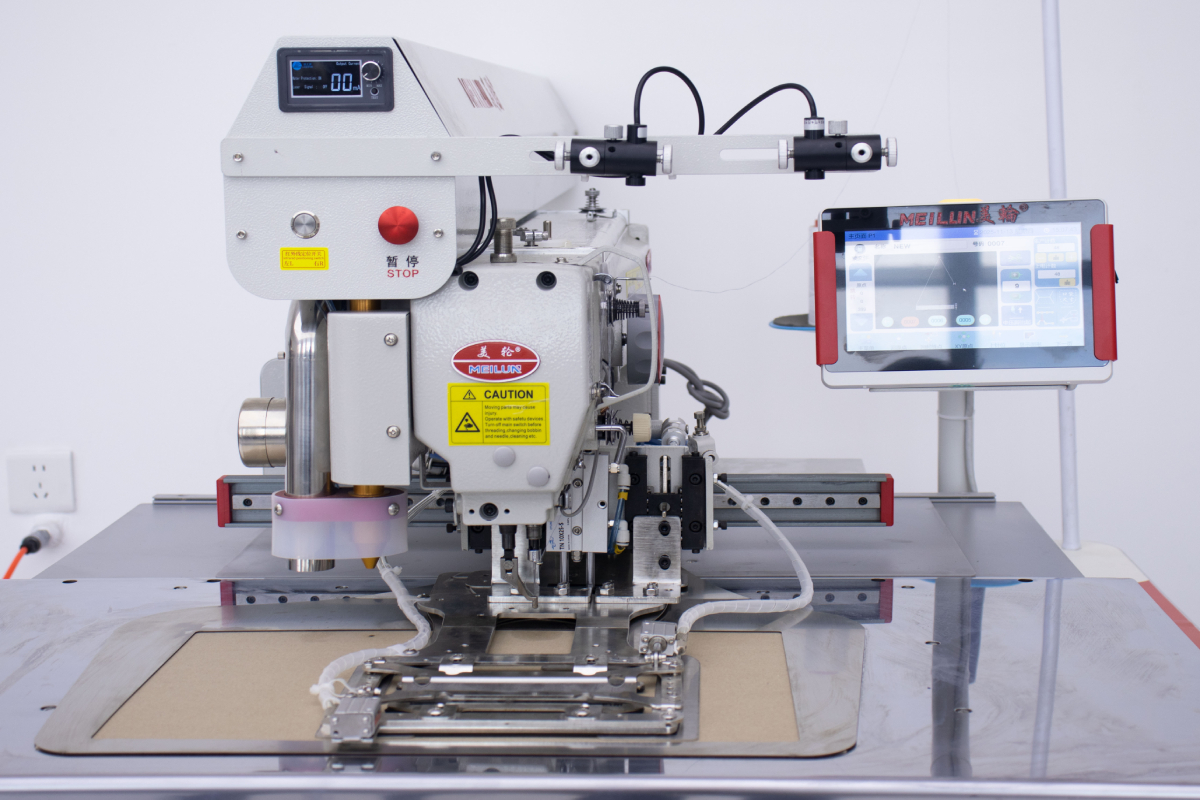
2. The Growth Catalyst: Computerized Sewing Automation
While basic machines get the job done, automated workstations are what actually scale your business and multiply profit margins. By replacing complex manual operations with programmable cycles, you minimize human error and massive bottlenecks.
🌟 The MEILLIN Automatic Elastic Waistband Workstation
Applying elastic bands to waistbands (such as joggers, shorts, and skirts) manually is notoriously slow and inconsistent[cite: 1]. The MEILLIN ML-3520G-LYJ Automatic Waistband Attaching Machine changes the game entirely[cite: 1].
- 4x Productivity: Operates at high speeds up to 3000 RPM, boosting overall waistband sewing efficiency by 3 to 4 times[cite: 1].
- Extreme Sizing Flexibility: Fully adjustable tension and feeding, supporting children's to oversized adult waistbands (size 24 to 35) without needing hardware changes[cite: 1].
- One Operator, Multiple Units: The automated feeding and sewing cycle allows a single operator to run multiple machines, slashing labor dependence[cite: 1].
Other Vital Automation Stations:
- Automatic Pocket Setters: For rapid and flawless pocket placement on shirts, jeans, and workwear.
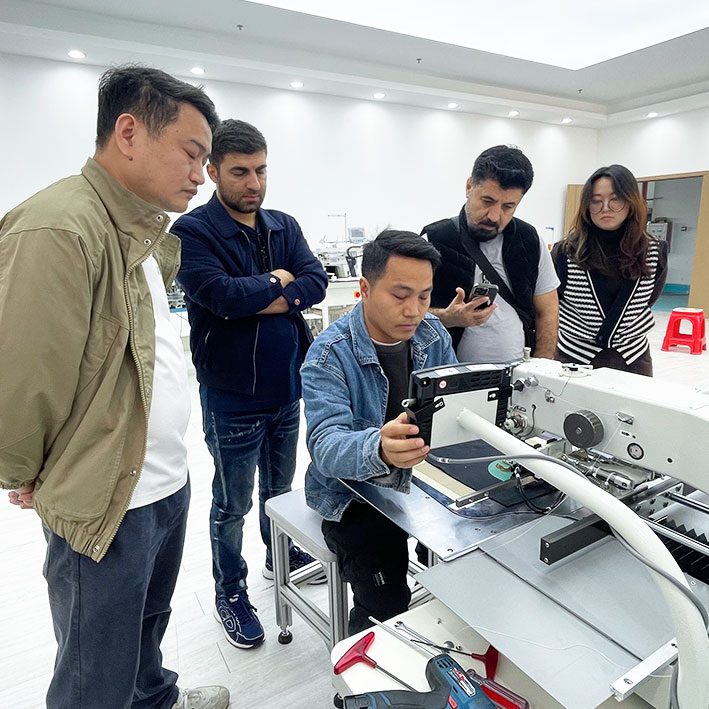
Automated Buttonhole & Button Attaching Machines: Programmed to sew uniform buttonholes and attach buttons in seconds with zero thread breakage
3. Cutting & Finishing Sections: The Quality Checkpoints
A garment factory is only as fast as its slowest department. Efficiency must extend to the cutting room and finishing lines.
A. Precision Spreading & Cutting Equipment
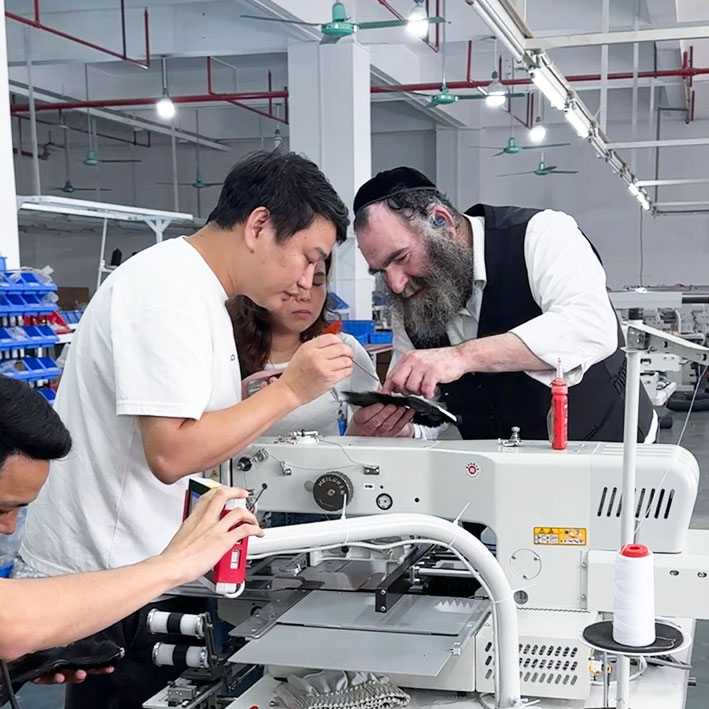
Accurate cutting is vital; a mistake in cutting destroys entire fabric plies. While manual round and straight knives are suitable for sampling and small batches, growing workshops benefit greatly from automatic spreading machines and computerized CNC cutting systems to save labor and maximize fabric utilization.
B. Industrial Ironing & Pressing Systems
The presentation of your final product determines its retail value. Investing in stable steam generator irons, vacuum ironing tables, and specialized collar/cuff pressing systems ensures your garments leave the factory in flawless, wrinkle-free condition.
🛠️ Key Considerations When Purchasing Your Machinery Park
Before buying your equipment, evaluate these critical operational parameters:
- Operational Flexibility: Choose machines that allow operators to shift between different garment styles and fabric thicknesses with minimal downtime.
- Energy Efficiency: Machines with modern servo motors significantly reduce long-term factory utility bills.
- Control System Reliability: Ensure your automated machines utilize recognized control systems (like Dahao or Ruineng) that offer strong resistance to water, oil, and dust, along with solid warranty terms[cite: 1].
🏁 Partner with MEILLIN 美輪® for Smart Turnkey Solutions
Whether you are building a boutique workshop or a large-scale industrial manufacturing plant, selecting the right machinery partner is half the battle. At MEILLIN (Qingyuan) Sewing Equipment Co., Ltd., we don't just supply individual machines—we provide comprehensive, automated, and customized factory setups designed to maximize your output[cite: 1].
Ready to eliminate your production bottlenecks and step into Industry 4.0 sewing? Explore our wide range of automatic sewing equipment today[cite: 1]!
📧 Contact us today for a professional, customized factory machinery layout plan and quick quotation!


 +8615018432001


Leave a message
Name*
*Phone*
*Info*
*