

Is Your Floor Space and Labor Wasting Profit? Rethinking Garment Production with Integrated Cutting & Sewing
Beyond basic speed: Why separate cutting and sewing processes might be the hidden bottleneck in your
Is Your Floor Space and Labor Wasting Profit?
Why separating cutting and sewing processes might be the hidden bottleneck in your apparel factory.
In manufacturing waistbands, pockets, and technical textile components, isolated multi-stage processes create silent profit leaks:
Manual or batch-cut materials shift prior to sewing, causing uneven margins, misaligned seams, and higher rejection rates.
Simultaneous manual trimming and sewing requires highly trained labor, making factory output vulnerable to turnover.
Lacking synchronous trimming during the sewing cycle, operators leave oversized safety margins that waste fabric over time.

Forward-thinking manufacturers are replacing single-function machinery with integrated workstation automation—combining material feeding, synchronous cutting, and high-speed sewing into one continuous cycle.
Fabric edges are automatically aligned and cut in sync with needle movement for clean, accurate edges.
A single operator manages automated cycles that previously required multiple manual steps, boosting output per sq ft.
Intelligent control maintains precise stitch length and tension while automated edge guidance minimizes seam allowance.
Evaluate your production line's readiness for next-generation manufacturing:
- Are you managing workers or processes? Automation shifts reliance away from worker fatigue and back to engineered consistency.
- What is the true cost of machine downtime vs. automation investment? Standalone basic units carry cumulative costs in labor and fabric waste that far exceed automated workstations.
- Can your factory scale quickly when orders surge? Automated cutting and sewing solutions allow capacity expansion instantly without months of labor recruitment.
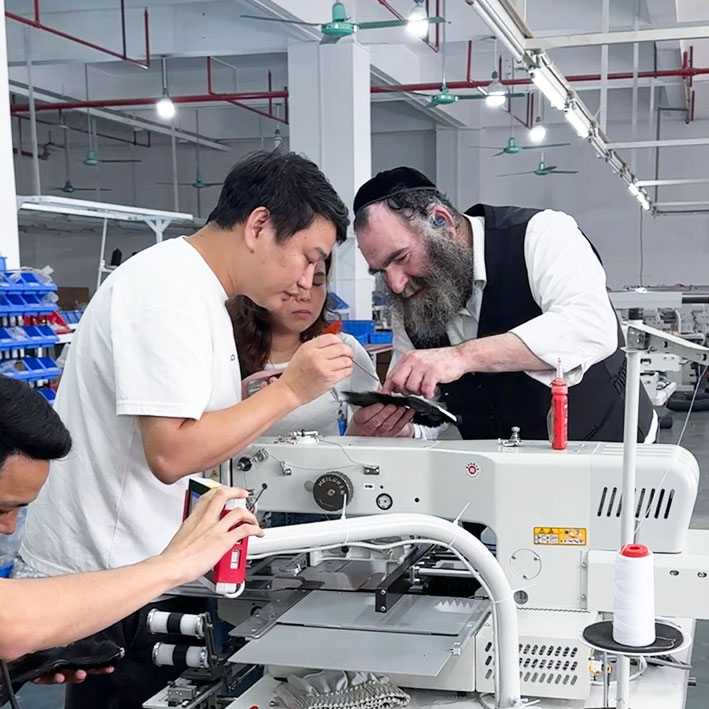
Take Control of Your Production Floor with MEILLIN (Qingyuan)
We design automated sewing and cutting workstations tailored to streamline your line, reduce labor dependency, and maximize floor productivity. Contact our engineering team today to explore customized automation layout plans!


 +8615018432001


Leave a message
Name*
*Phone*
*Info*
*